
Listicle: Cons and Comedies
By Tina Ter-Akopyan

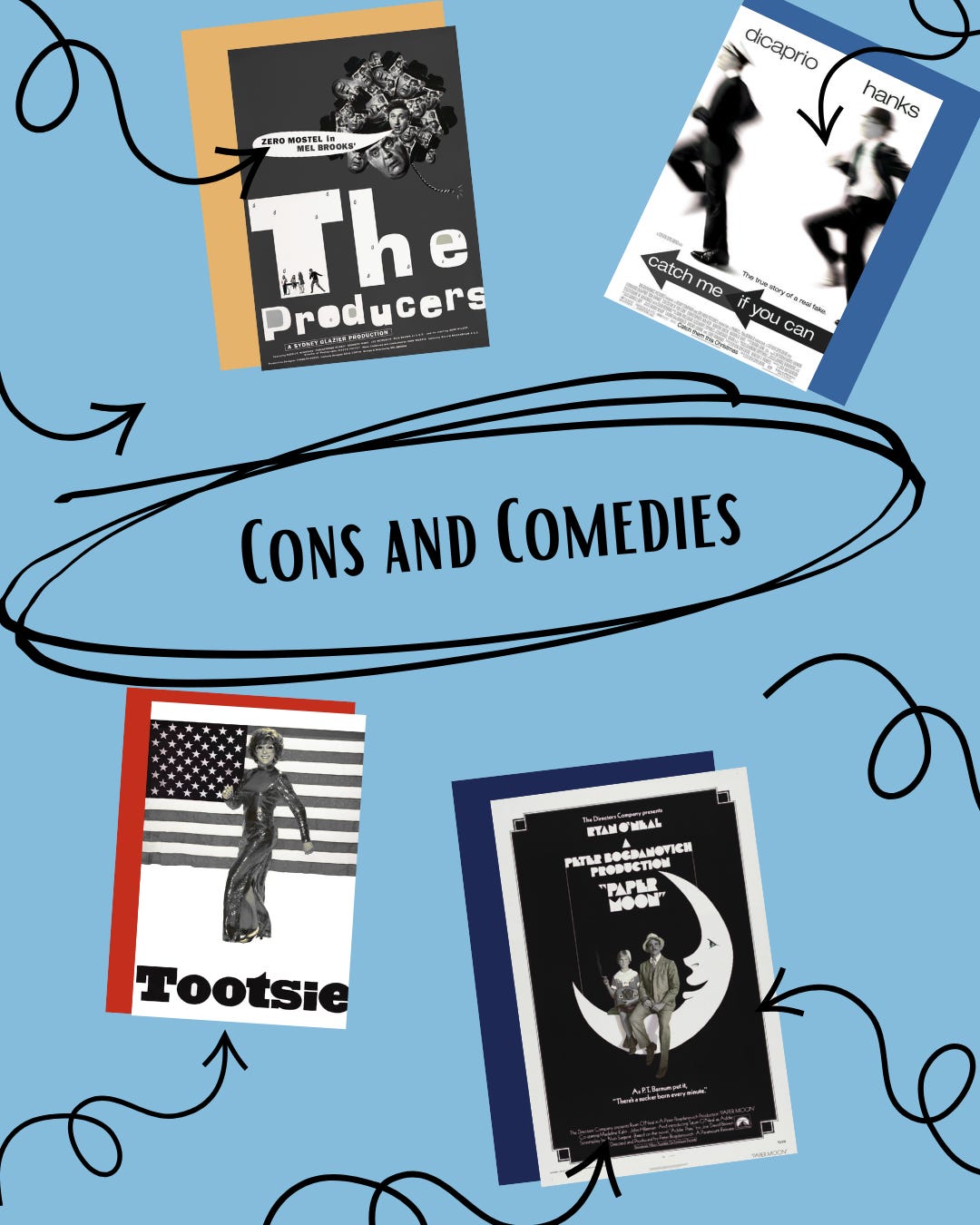
“What we professional liars hope to serve is truth. I’m afraid the pompous word for that is ‘art.’ Picasso himself said it. Art is a lie. A lie that makes us realize the truth.”
-Orson Welles
In a way, all filmmakers act as con artists. Through their elaborate schemes and chicanery, con artists mold and bend society’s expectations to their advantage. Similarly, filmmakers reconstruct reality through sets, actors, editing, and countless techniques to emotionally invest the audience into a fictional story, which unveils a deeper truth. The self-awareness, charisma, and underdog quality of con artists have made them the ideal subject of filmmakers. Films about cons give directors the freedom to devise stories that play with irony and comedy. Let’s take a look at some of Hollywood’s iconic con artists, grifters, and pranksters who have defined the genre of con comedies.
Paper Moon (1973)
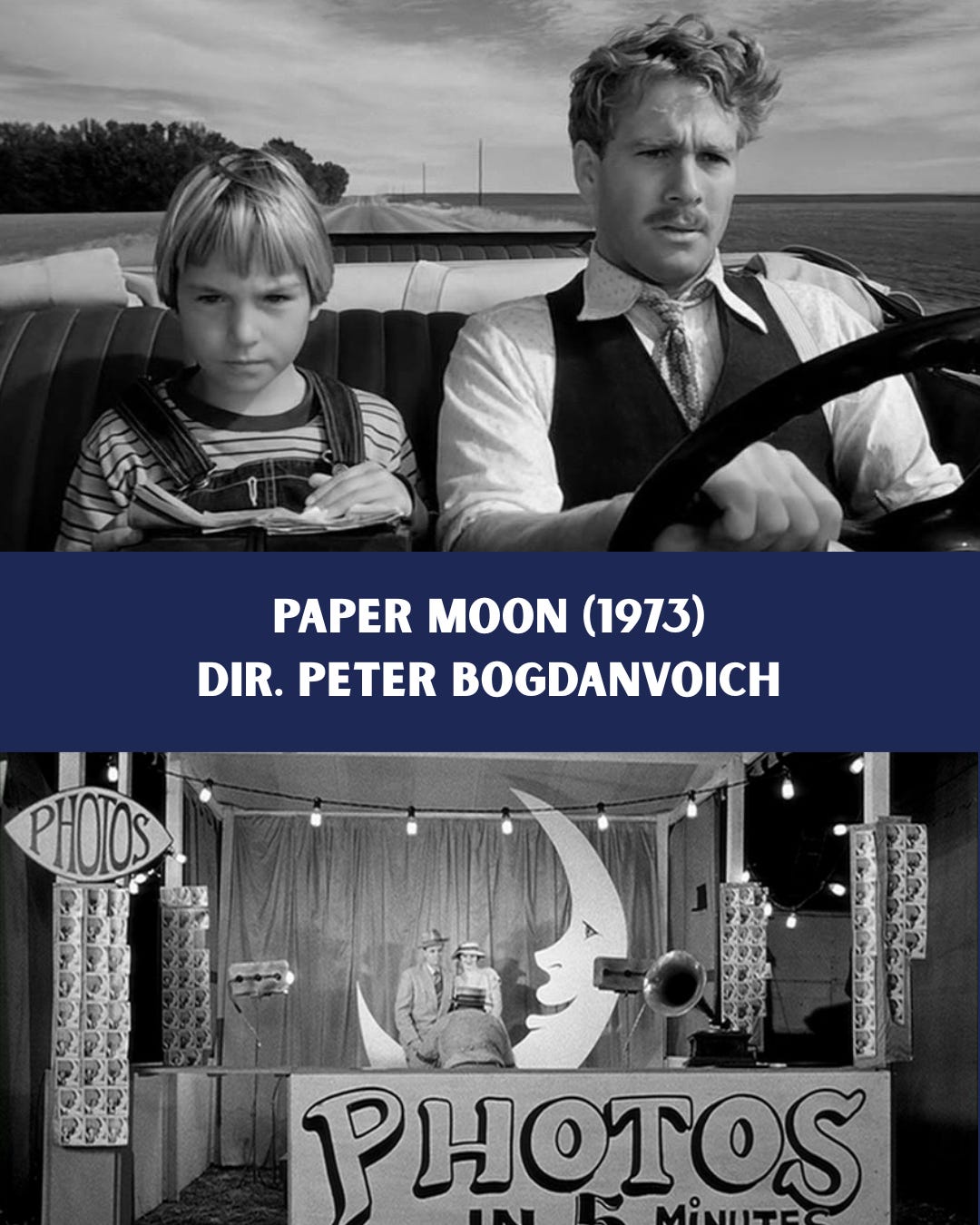
Say, it’s only a paper moon
Sailing over a cardboard sea
But it wouldn’t be make-believe
If you believed in me
The best con artists are often the most unassuming. In Peter Bogdanovich’s caper comedy Paper Moon, a witty and sly nine-year-old girl Addie (played by Tatum O’Neal) transforms from a lonely orphan into a talented con artist. Most con artists pursue their careers for financial satisfaction. Others plan grand schemes just for the thrill of it. For Addie, she uses her skills in deception to make her partner in crime and supposed father Moses (played by Tatum’s real life father Ryan O’Neal) proud. After losing her mother, Addie puts herself under the care of the only person who shows up to her mother’s funeral, Moses. A charlatan bible salesman, Moses begrudgingly agrees to take Addie to her aunt in Missouri. An observant and smart young girl. Addie immediately sees through Moses’s schemes and helps him make more money than before. Tatum steals the show through her tomboy charm and went onto become the youngest Best Supporting Actress Oscar winner at only the age of ten. Two lonely drifters, Moses and Addie soon form a close bond, as they trick and cheat their way through the Midwest.
Through this film, Bogdanovich strips away the glitz and glamour often associated with the lives of con artists. Set in the middle of the Great Depression, Bogdanovich creates a baren, gritty, and dusty landscape, as Moses and Addie travel through the endless roads of the Midwest. Unlike his other films, Bogdanovich veers away from nostalgia and instead paints a realistic portrait of poverty and hopelessness in the 1930s. Out of desperation and necessity, Moses and Addie target the humble and poor widows they encounter on the road. However, over the course of their road trip, they realize that everyone is playing their own scheme to survive. From bootleggers to “exotic dancers,” Bogdanovich demonstrates how the dire circumstances of the world push everyone to cheat and lie in order to survive.
The reason why Paper Moon stands as one of the greatest caper films is because the con scheme does not serve as the spectacle of the film, but instead, unlocks the inner lives of these lonely characters. The lyrics of the titular song capture the core of Moses and Addie’s journey in the film. In a world filled with artificiality and lies, Moses and Addie find a true sense of companionship and love that gives them hope for the future.
Catch Me If You Can (2002)
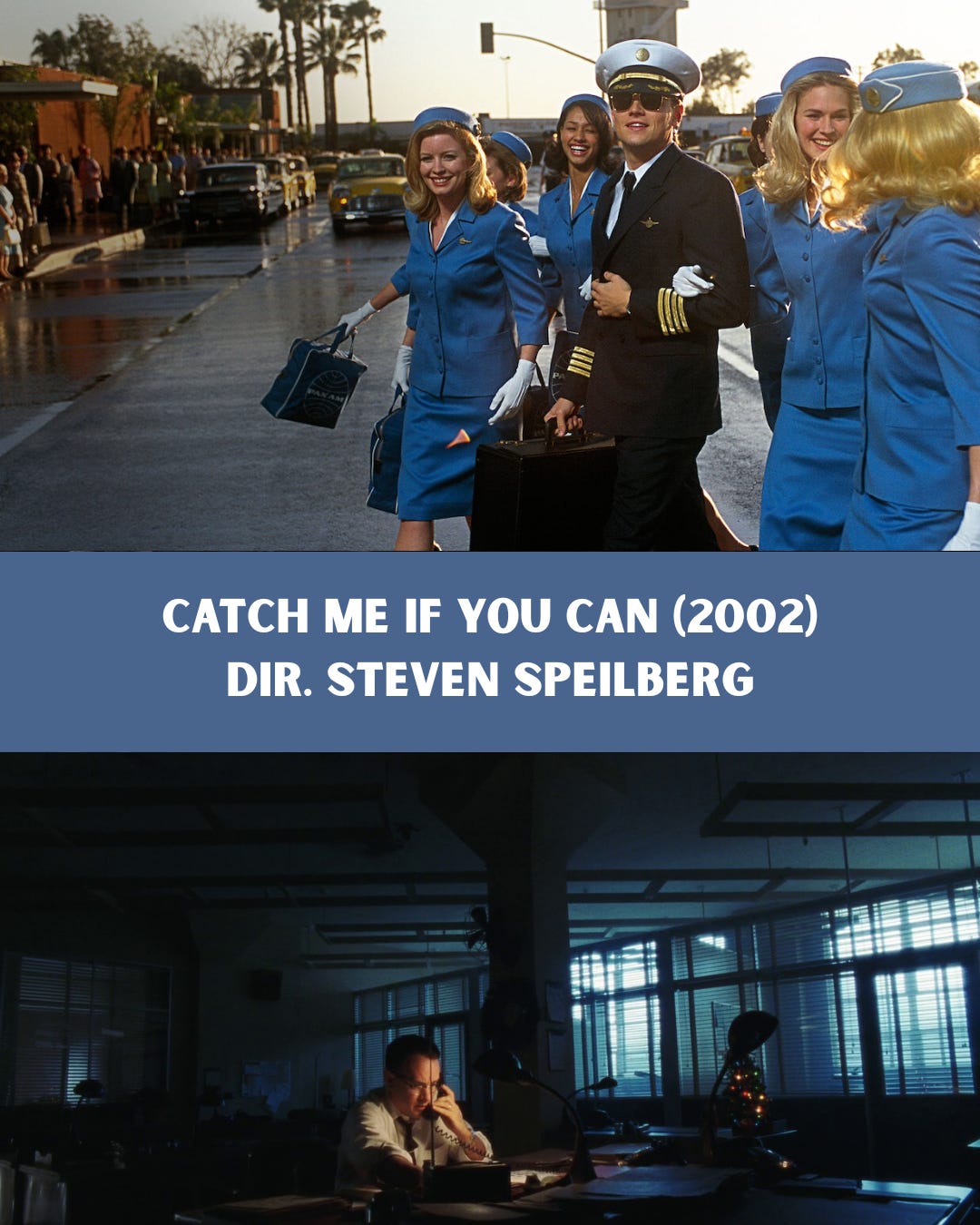
FRANK ABAGNALE JR.
“Dear Dad, you always told me that an honest man has nothing to fear, so I’m trying my best not to be afraid.”
A pilot, an E.R. doctor, and a lawyer. This was Frank’s Abagnale Jr.’s impressive resume all by the age of nineteen. Frank cemented himself as one of America’s most impressive con artists, as he schemed, cheated, and lied his way into acquiring millions of dollars using nothing but his wit and confidence. Fascinated by Frank’s whirlwind life, director Steven Spielberg adapted his story into his action-comedy Catch Me If You Can, starring Leonardo DiCaprio as Frank and Tom Hanks as FBI Agent Carl Hanratty.
After discovering that his mother is having an affair, Frank runs away from his home, as the illusion of his parents’ fairytale relationship shatters. In need of money, Frank turns to forging checks. As he succeeds with his short cons, his ambitions lead him to orchestrate bigger schemes. Reinventing himself every few months with a new identity, Frank continuously escapes the grasps of the FBI. Through DiCaprio’s charisma and Spielberg’s Old Hollywood style, the film depicts the glamour and thrill of Frank’s life, as he enters high power roles by following the adage “fake it, till you make it.” The most iconic moment of the film occurs when Frank walks out in his pilot uniform with a group of airplane stewardess fawning over him and once again evading the detection of Agent Hanratty. Frank’s ability to lie his way to the top sends a larger message about the deceitful illusion of the American Dream. With no degree, no expertise, and no background, Frank cheats the system and shows how all of society’s rules are as flimsy as a paper moon. Nonetheless, the more Frank reinvites himself, the more fragmented his identity becomes, leaving him with nothing real to grasp onto.
The emotional core of the film appears in the cat and mouse relationship between Frank and Agent Hanratty. Similar to Addie in Paper Moon, one of the driving forces of Frank’s con life is his loneliness and dream to create better reality for himself. Frank’s crumbling family life leaves him isolated and unsure about how to face the complexities of the real world. Instead, he runs away and creates a make-believe life for himself. Attracting the attention of Agent Hanratty, Frank teases and tricks Hanratty to always fall one step behind him. Frank finds Hanratty’s determination to catch him as sign that someone cares about his existence. Facing family troubles himself, Hanratty feels a close affinity to Frank, as he recognizes their shared loneliness. Through the lens of Frank Abagnale Jr. shapeshifting life, Spielberg delves into a larger conversation about the truths and illusions of American society.
The Producers (1967)
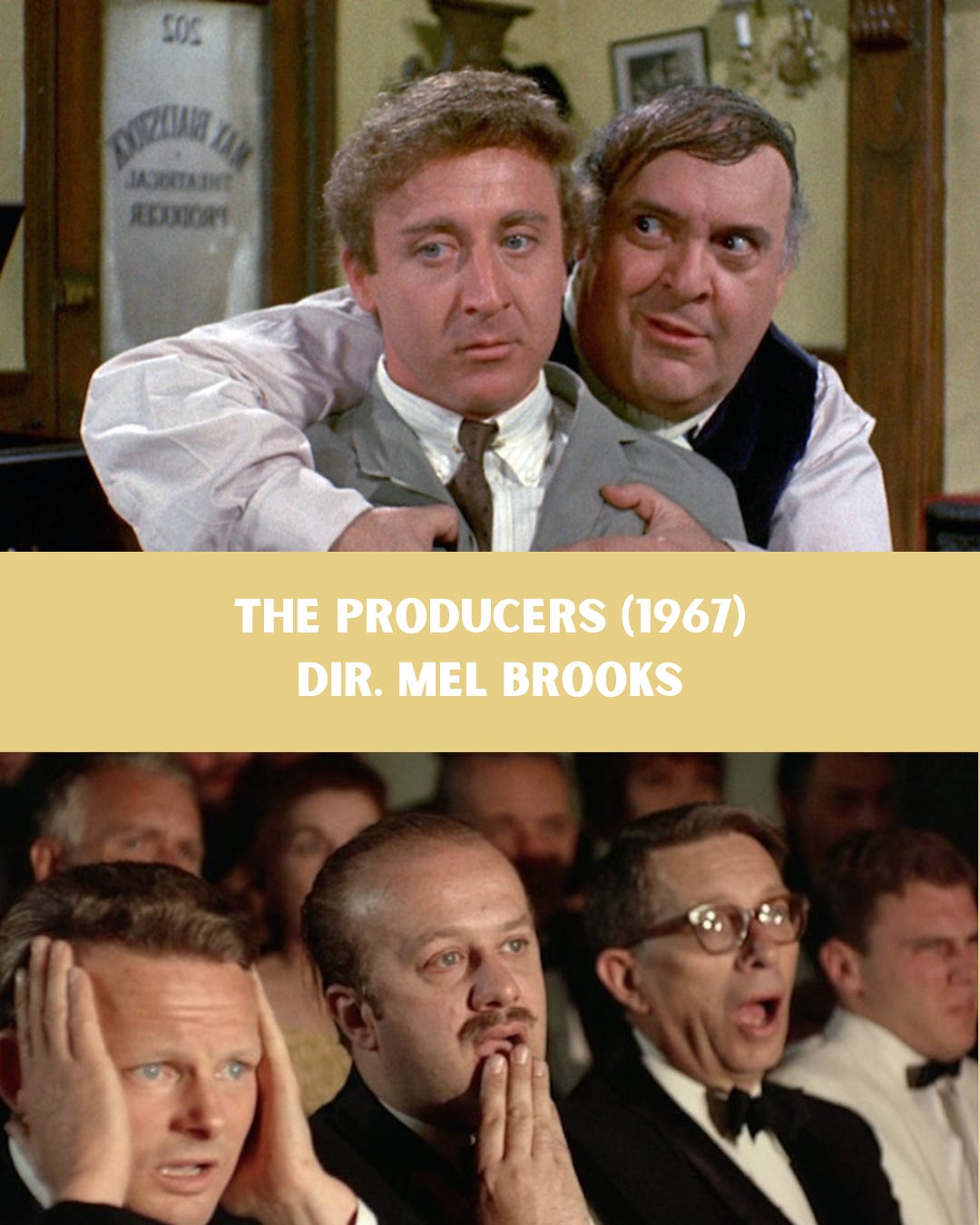
BIALYSTOCK
“How could this happen? I was so careful. I picked the wrong play, the wrong director, the wrong cast. Where did I go right?”
Con artists are experts in finding shortcuts in a system which rewards those who bend the rules rather than abide by them. The thrill of undermining the rules and running away scot-free creates a sense of power and appeal. In Mel Brooks’s The Producers, broke and depressed Broadaway producer Max Bialystock (Zero Mostel) has fallen from his glory days and left with nothing but a series of flops. When a young nervous accountant Leo Bloom (Gene Wilder) comes to audit his accounts, he explains how Bialystock can make a fortune through a loophole in the IRS. The unlikely duo team up and craft their grand scheme. By convincing investors to place millions of dollars into a flop show, Bialystok and Bloom can keep the invested money without the IRS tracking them down. However, if the show succeeds, they will have to pay back all their investors, leaving them bankrupt. Bialystock and Bloom take the risk and devise the ultimate flop show: Springtime for Hitler.
On the surface, the musical, written by a deranged ex-Nazi, seems like the perfect candidate for a flop. In addition to being absurd and offensive, Bialystock and Bloom double down by casting the worst actors, including a hippie to play the lead role of Hitler, memorably portrayed by Dick Shawn. However, to their dismay, the audience buys into the musical as a satire. Ironically, the show becomes Bialystock’s first hit in years but leaves him broke. Ultimately, Bialystok and Bloom become trapped in their scheme.
Known for his loud, absurd, and fearless comedies, Mel Brooks blends within his humor a critical reflection of the greed and superficiality of American culture. Through his performance of Bialystock, Mostel paints the caricature of sleazy scam artist, whose inability to keep up with changing times has left him obsolete. Measuring his success through his wealth, Bialystock wants the comfort and attention he tasted when he achieved his American Dream as a top-notch producer. On the other hand, Wilder captures the gullible and insecure personality of Bloom, leading him to believe in Bialystock’s fantasy. Bloom believes that money will give him the confidence to move past his anxieties. Despite the envious and exploitative behaviors of Bialystock and Bloom, their confidence and risk make the audience invested in the success of their scheme. As he makes the audience fall for two morally questionable grifters, Brooks demonstrates that the charm and appeal of con artists (despite their inconsiderate and selfish behavior) come from their relentless determination and underdog quality.
Tootsie (1982)
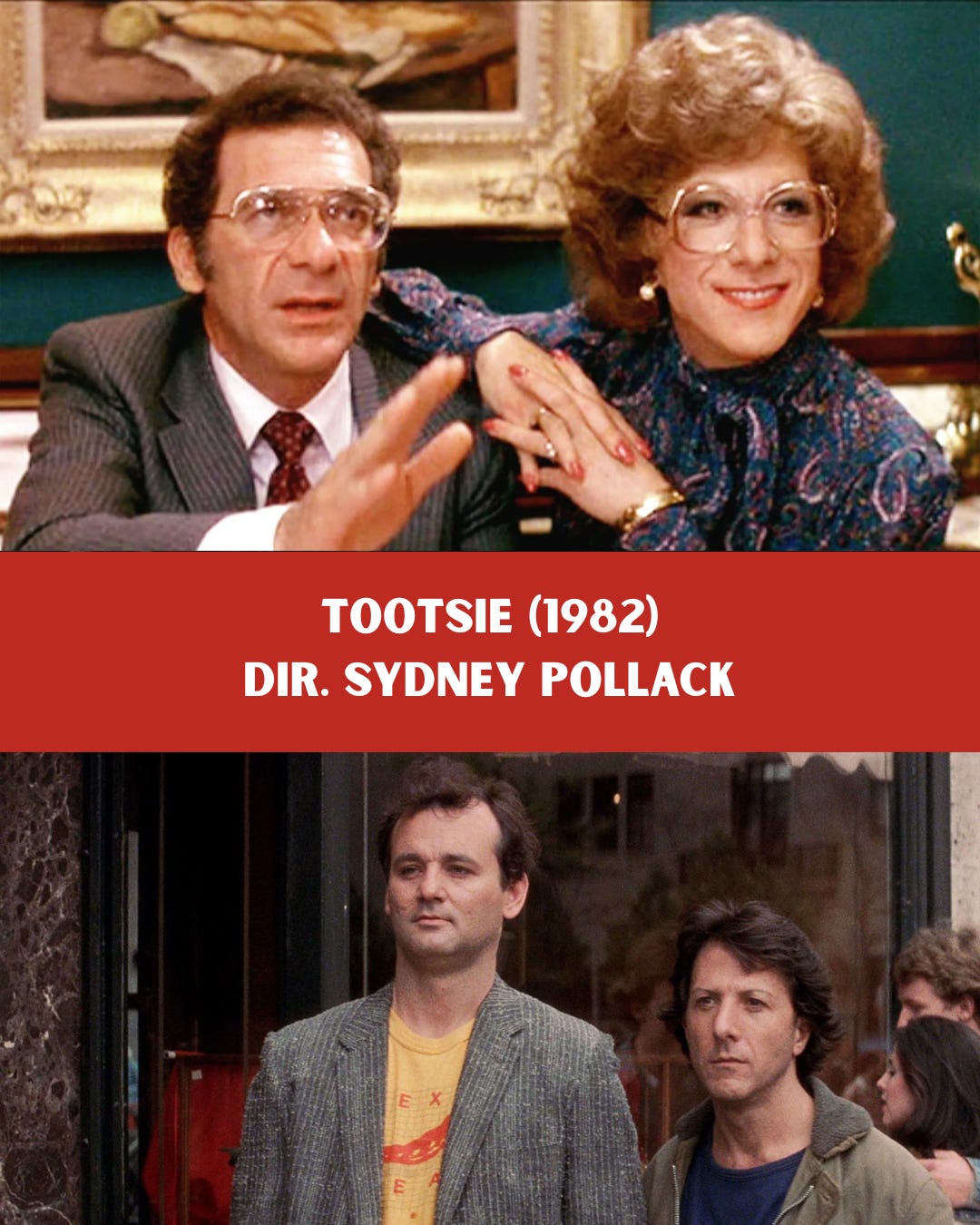
RON CARLISLE
“Take ten, Tootsie.”
DOROTHY MICHAELS
“Ron? I have a name it’s Dorothy. It’s not Tootsie or Toots or Sweetie or Honey or Doll.”
A common plot device in many con films is cross-dressing. Whether the con artists try to pass themselves off as wealthy aristocrats or subverting gender norms by dressing as the opposite sex, disguises not only create comedic confusion but also undermine the rigidity of societal standards. The tradition of cross-dressing dates to Shakespeare, when male actors played female roles on stage. Building off the legacy of screwball comedies, such as Billy Wilder’s Some Like It Hot (1959), Tootsie is a Hollywood classic that upends gender norms through the lens of comedy and deception. The film follows a New York actor, Michael Dorsey (Dustin Hoffman), who struggles to book an acting gig because of his ego-centric and obnoxious personality. Desperate to work and prove his worth, Michael dresses up as a woman to audition for the role on a soap opera show. Transforming from Michael Dorsey to Dorthy Michaels, he lands the role and becomes the star of the show, fooling not only his co-workers but the entire nation. However, as Michael falls in love with co-star Julie Nichols (Jessica Lange) while his male co-star falls in love with him, the pressure to uphold the charade causes Michael to crack.
After winning Best Actor at the Oscars for his performance in Kramer v. Kramer (1979), Dustin Hoffman took a 360-degree turn with this comedic role in Tootsie. A key scene where Hoffman’s comedic sensibilities shine is when he first introduces his new persona as Dorthy Michael to his agent George Fields, (played by the director of the film Sydney Pollack) who had lost all hope for Michael’s career. Fields does not even recognize Michael as he sits down at his table in a floral dress and full-on makeup. Once he changes the pitch of his voice, he leaves Field completely shocked. As he switches from his voice to Dorthy’s nasally pitch, Hoffman masterfully juggles both personas at once.
A lesser film would simply repeat the same gags of a man struggling to follow a woman’s routine; however, the film moves beyond the joke and instead examines how Michael’s experience being viewed as a woman by society significantly changes his inner perspective as a man. In transforming into Dorthy, Michael becomes a more sympathetic, caring, and engaging character. Instead of dismissing the women in his life, he uplifts and supports them, as Dorothy. Strong headed, courageous, and funny, Dorthy contrasts Michael’s pessimistic and whiny behavior. As Dorthy challenges the treatment of women on set and asks for rewrites of the script to change the submissive representations of the female characters on the show, Pollack illustrates how the gender-switch spotlights the inequality women face, as Michael would never be treated in the same way as Dorothy. In changing his perspective and upending his routine to become a woman, Michael comes to realize how ego-centric and emotionally disconnected he has acted most of his life. Michael’s con becomes bigger than himself – what started as a scheme to cheat the system launches Michael into a larger reflection on how he sees himself as a man.
Thank you for reading along and supporting Films in Conversation!
any time I feel the slightest tinge of self-doubt, I put on Catch Me if You Can. works every time.